
Eden: Christian Dating App
In-app purchases
4.0star
57.6K reviews
1M+
Downloads

Mature 17+
info

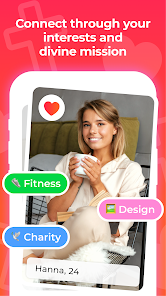


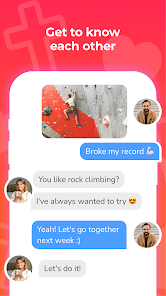

About this app
The app where the single Christians find each other and start happy families.
Get an answer to your prayer.
Why did we decide to develop a Christian dating platform Eden?
The developers of this mobile app noticed that the spiritual values became rare. Love and feelings often got replaced with the basic needs, based on the primal drives. Unfortunately, it is very hard for men and women obeying the Scriptures and living a godly life to find a faithful life partner. Happily, international resources for Christian dating and evangelical faith began to emerge.
Reading the Bible, we can see God creating thousands of happy families that influenced and changed this world. Our app has the same goal.
The application for the believers Eden – find a faithful life partner.
The Eden app was developed for Christian platform and have already received a lot of grateful feedback on the Christian forums from the people who found their love and started families.
The navigation of the app allows you to easily find Christians of various confessions: SDA (Adventists), ECB, Pentecostals, charismatics.
When registering, select your confession direction: Protestants, Catholics, Orthodox.
According to the statistics, about 26% of the families start with Christian internet dating platforms. Our app will help you to find a person after your heart, that will probably become your spouse, the father (mother) for your kids and a partner to live your life following the Bible as commanded by Jesus and the church.
Get an answer to your payer. Download the app right now and get to know new people from around the world: you never know whether your soulmate will be local or a foreigner. Let God work! This platform is popular among people of all the races and confessions: black or white, baptist or catholic - God is willing to bless your life in a unique way!
Ever wondered why should it be so hard for a Christian to find serious dating apps? Are there any singles near me? How can I find someone to build a holy relationship with? How can I meet new friends and people from all the confessions for faith social interaction or even for dating and probably marriage?
Let us present you one of the top Christian apps – Eden! It’s a serious relationship dating app for Protestant, Orthodox and Catholic dating, religious apps.
Eden is a fun community allowing Christian singles from all around the world – whether they live in Australia, Germany or South Africa or elsewhere – to meet friends, chat, support each other’s faith and date people of any race and origin!
We’ve spent our time developing this date app so you could spend yours on chat date
with your new crush!
You can stay anonymous if you want, just chat people, find new friends and if you feel things are getting serious – then meet in person!
Meet & chat singles from around the world right now!
Manage your dates online!
It’s free for adults!
Christian dating website, ace dating religious apps catholic, chatting app - the mingle of premium service, in a single app with a sprinkle of Jesus and a Holy Gospel!
Eden makes Christian datings online easier!
It’s a good chance for dateing!
Get an answer to your prayer.
Why did we decide to develop a Christian dating platform Eden?
The developers of this mobile app noticed that the spiritual values became rare. Love and feelings often got replaced with the basic needs, based on the primal drives. Unfortunately, it is very hard for men and women obeying the Scriptures and living a godly life to find a faithful life partner. Happily, international resources for Christian dating and evangelical faith began to emerge.
Reading the Bible, we can see God creating thousands of happy families that influenced and changed this world. Our app has the same goal.
The application for the believers Eden – find a faithful life partner.
The Eden app was developed for Christian platform and have already received a lot of grateful feedback on the Christian forums from the people who found their love and started families.
The navigation of the app allows you to easily find Christians of various confessions: SDA (Adventists), ECB, Pentecostals, charismatics.
When registering, select your confession direction: Protestants, Catholics, Orthodox.
According to the statistics, about 26% of the families start with Christian internet dating platforms. Our app will help you to find a person after your heart, that will probably become your spouse, the father (mother) for your kids and a partner to live your life following the Bible as commanded by Jesus and the church.
Get an answer to your payer. Download the app right now and get to know new people from around the world: you never know whether your soulmate will be local or a foreigner. Let God work! This platform is popular among people of all the races and confessions: black or white, baptist or catholic - God is willing to bless your life in a unique way!
Ever wondered why should it be so hard for a Christian to find serious dating apps? Are there any singles near me? How can I find someone to build a holy relationship with? How can I meet new friends and people from all the confessions for faith social interaction or even for dating and probably marriage?
Let us present you one of the top Christian apps – Eden! It’s a serious relationship dating app for Protestant, Orthodox and Catholic dating, religious apps.
Eden is a fun community allowing Christian singles from all around the world – whether they live in Australia, Germany or South Africa or elsewhere – to meet friends, chat, support each other’s faith and date people of any race and origin!
We’ve spent our time developing this date app so you could spend yours on chat date
with your new crush!
You can stay anonymous if you want, just chat people, find new friends and if you feel things are getting serious – then meet in person!
Meet & chat singles from around the world right now!
Manage your dates online!
It’s free for adults!
Christian dating website, ace dating religious apps catholic, chatting app - the mingle of premium service, in a single app with a sprinkle of Jesus and a Holy Gospel!
Eden makes Christian datings online easier!
It’s a good chance for dateing!
Updated on
Safety starts with understanding how developers collect and share your data. Data privacy and security practices may vary based on your use, region, and age. The developer provided this information and may update it over time.

No data shared with third parties
Learn more about how developers declare sharing

This app may collect these data types
App info and performance and Device or other IDs

Data isn’t encrypted

You can request that data be deleted
Ratings and reviews
4.0
57.2K reviews

keith rovere
- Flag inappropriate
October 27, 2020
Probably the worst dating app I've seen so far. There is no way for them to show you only women. So I'm getting a bunch of dudes on my swipe list. No way to set the distance to 20 miles which is about the most people would want to drive. The shortest distance is showing me people in freaking Canada! Nothing is in miles for driving time or in feet for height. No clear button to save your information. Completely worthless
124 people found this review helpful
Digital Church
October 28, 2020
Thank you for your opinion. It's a shame you didn't like it. We are working to improve!

SAMSON NGAYALINAROBERT
- Flag inappropriate
- Show review history
April 18, 2024
Living in a rural area, opportunities to meet new people are limited. This app bridges that gap, connecting me with potential matches I wouldn't have met otherwise.The user interface of this app is intuitive and easy to navigate. It's refreshing to use a platform that prioritizes user experience
2 people found this review helpful

Nikola Savic
- Flag inappropriate
- Show review history
December 14, 2023
Changed from four stars to two. Reasons: It repeats profiles I've already swiped, it wont let me try or buy Premium because it says "Log into your Google account" or something, even though I am already logged in both in the app and the play store, and the third and biggest. I have girls that liked me in the age group I chose, but they wont show up even on the highest radius, even though I swiped EVERYONE ON THE APP, so now theres no profiles showing, unless I decide to click the restart button.
9 people found this review helpful
Digital Church
December 15, 2023
Please contact support. We will check this error.
What's new
Meet the improved profile version - "My lifestyle"!
No need to invent an intro, just select what you like with a single tap.
The profile became more laconic. It's fast and easy to complete and it looks lovely :)
- New profile item "My lifestyle"
- One profile item instead of several
The app became better thank you and God!
Please, switch the automatic update on in your settings and never miss the improvements and new features
We do our best for you :)
No need to invent an intro, just select what you like with a single tap.
The profile became more laconic. It's fast and easy to complete and it looks lovely :)
- New profile item "My lifestyle"
- One profile item instead of several
The app became better thank you and God!
Please, switch the automatic update on in your settings and never miss the improvements and new features
We do our best for you :)


